
Call (615) 209-7643 Get my free estimate
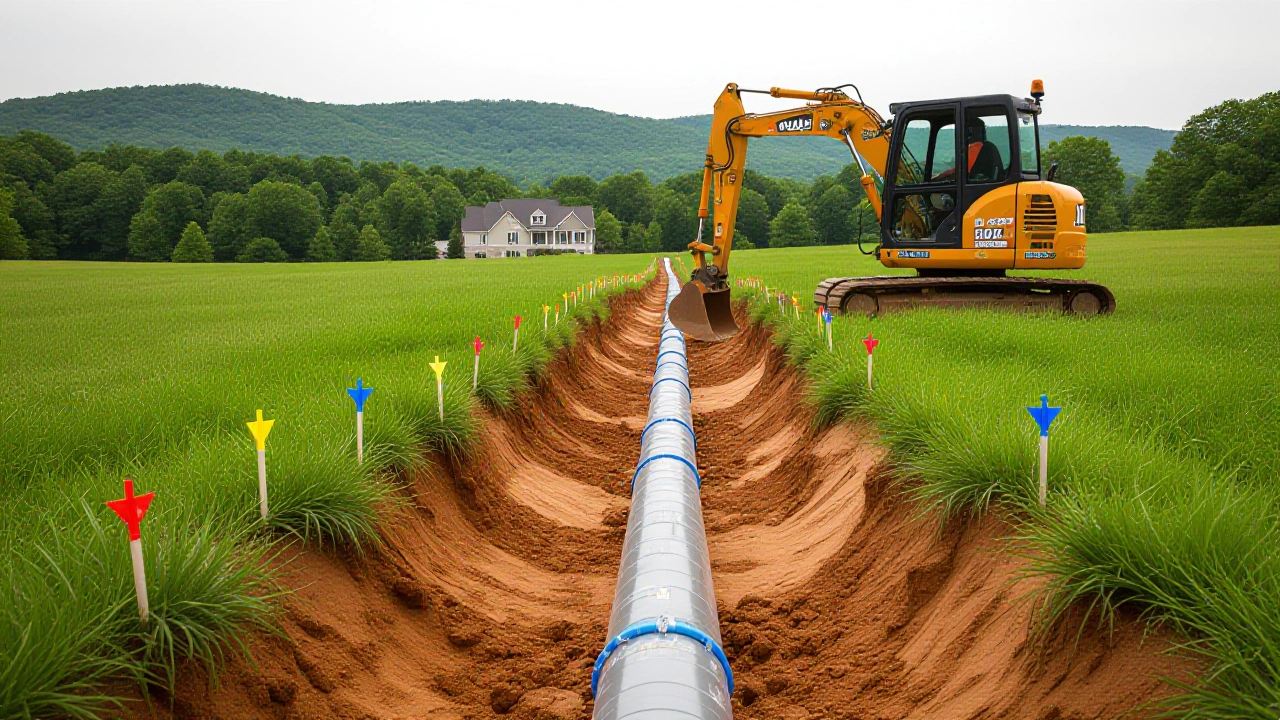
Narrow utility trench across a field with pipe laid in the bottom and marker flags along both sides

06 · Utility Trenching

Utility trenching for electric, water and sewer lines in Nashville

We dig trenches for “electrical, water, and sewer lines,” from a power run out to a new shop to the service lines for a new house. The ditch itself is simple. Not hitting what’s already in the ground is the hard part.

Call (615) 209-7643 or send the estimate form

Each line asks for a different trench

An electric conduit, a water service and a sewer line don’t want the same ditch. Depth is set by the utility, the code for that kind of line and the inspector who signs off on it, and the trench is dug to what they require. Width comes from the pipe or conduit plus room to bed it.

Sewer is the fussy one. It runs on gravity, so the trench bottom has to fall steadily from the house to the main or the tank, with no dips where waste can settle. A water line can follow the lay of the ground; a sewer line can’t. That makes the grade of the trench floor as important as its depth, and it gets checked while the digging goes on, not afterward.

The lines 811 won’t mark

Tennessee 811 notifies its member utilities, and they mark what they own. Plenty of what’s buried on a property isn’t theirs. Tennessee 811’s own list of privately owned lines includes the water service between the meter and the house, sewer laterals, sprinkler and irrigation lines, propane lines from the tank, alarm and communication lines between buildings, and electric secondary lines running from a pull box or transformer to a meter or building.

Those are exactly the lines a new trench across a yard tends to cross. Before digging we ask what you know: where the old shop gets its power, where the sprinkler lines run, where the sewer or septic line leaves the house.

Near the paint, the shovel takes over

Tennessee law sets a safety zone around each marked line: a strip at least four feet wide, and no wider than the utility plus two feet on either side. Inside it, an excavator has to take reasonable care by hand digging when practical, using pneumatic hand tools, or using methods the utility approves. If there’s clear evidence of an unmarked line once the crew is on site, digging waits until an additional notice goes in to 811.

Open for the inspector, then backfilled

Many installs have to be seen in the open trench before they’re covered, so the ditch stays open until the inspection is done. Backfill goes in with clean material around the pipe or conduit first, then native soil in layers, each one packed down. A trench filled loose turns into a sunken stripe across the yard after the first hard rain. Once it’s filled, the surface is dressed and ready for seed and straw.

What this covers

  • Electrical lines
  • Water lines
  • Sewer lines

Talk it through

(615) 209-7643

Free, no-obligation estimates. You get the schedule before the work starts.

Get my free estimate

Answers

Questions about utility trenching

How much does utility trenching cost per foot?

There isn’t one per-foot number. Trench length is the starting point, then depth, the kind of soil, rock, crossings under driveways or walks, how many lines share the trench, and how much lawn or pavement has to be put back. A short run through an open yard and a long run under a driveway to a barn price very differently.

How deep are utility lines usually buried?

It varies with the kind of line, the utility and the age of the install, so no buried line should be assumed to sit at a standard depth. Locate marks show where a line runs, not how deep, and Tennessee 811 warns that the actual location can vary from the marks. That is why digging near them is done by hand.

Will 811 mark the water line from my meter to my house?

Generally no. Tennessee 811 lists the water service between the meter and the house among the privately owned lines that the property owner or excavator may be responsible for locating. Sewer laterals, sprinkler lines and propane lines are on the same list. Those have to be found from records, memory or a private locating service.

If I hire someone to dig, who calls 811?

The contractor does, in its own name. Tennessee 811 says that when a homeowner hires an excavator to work on the property, that excavator must have a ticket in their name. A ticket the homeowner requested does not cover the company doing the digging, so each party that digs needs its own.

Why does a sewer line trench need a steady slope?

Because sewage moves by gravity. The pipe has to fall continuously from the house to the main or the septic tank so the water carries solids along. A low spot, called a belly, collects waste and clogs, and a section laid too flat drains slowly. The trench floor is graded and checked before the pipe goes in.

Will my yard sink where the trench was dug?

Not if the backfill is compacted. A trench filled all at once with loose soil settles into a low stripe after a few rains. Placing the fill in layers and packing each one cuts that down sharply, and a slight crown left over the trench line on purpose helps it finish level with the yard.

Free estimate

Get an estimate for utility trenching

Where your message goes and what we keep: privacy policy.

Free, no-obligation estimates

Tell us about the land

Where it is, what is on it now and what you want it ready for. We will look at it and give you a written estimate and a schedule before anything starts.

Call (615) 209-7643 Free estimate