
Call (615) 209-7643 Get my free estimate
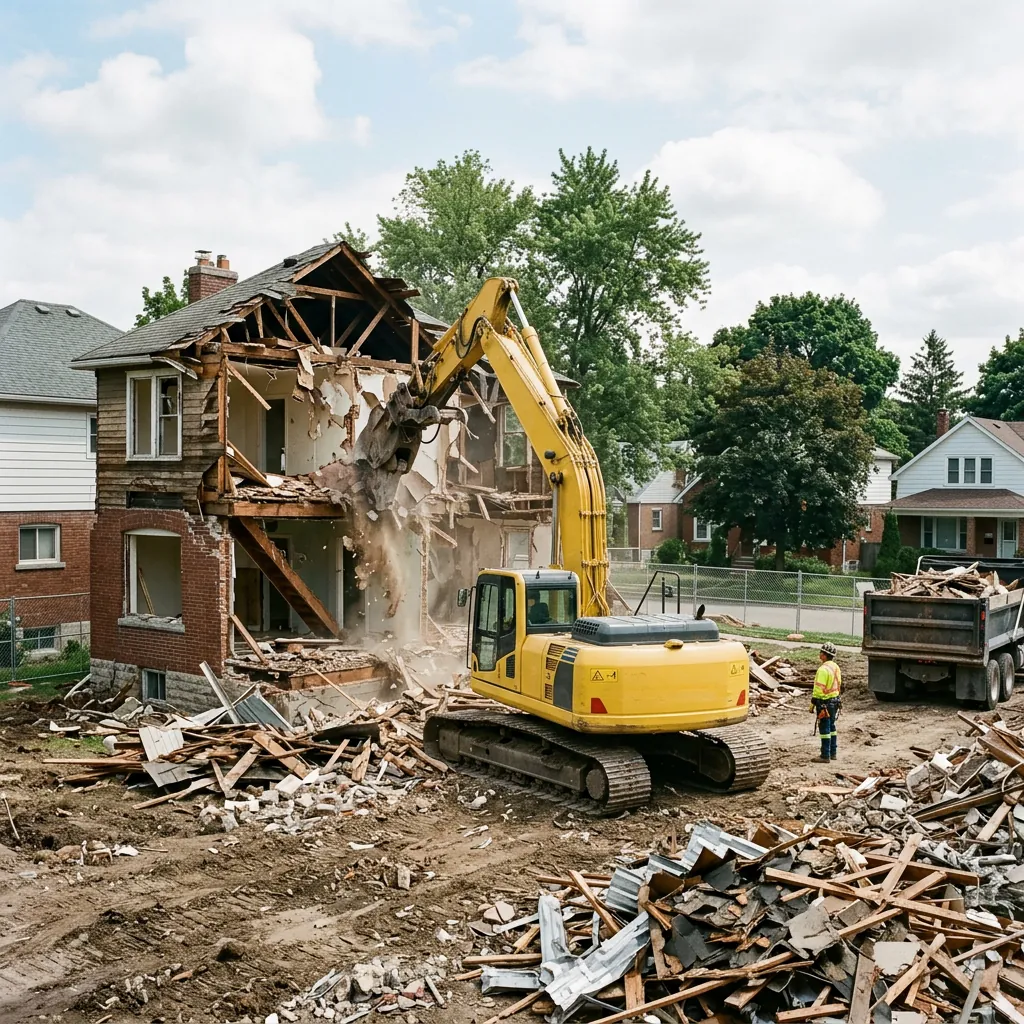
Excavator tearing down a two-story house with a dump truck waiting for the debris

04 · Demolition

Demolition in Nashville: old houses, outbuildings, damaged buildings

Taking a building down is the quick part. Shutting off the utilities, getting through Metro’s paperwork, and “managing debris and site safety” are what take the time.

Call (615) 209-7643 or send the estimate form

How a teardown goes

A machine can pull down a small frame house faster than most people expect. What surrounds that moment is the real job. Before anything is touched, every utility has to be disconnected by the company that owns it, because a live gas line or a hot service drop inside a collapsing wall is the worst thing that can happen on a demolition site.

Neighbors matter too. Dust, flying debris and trucks on a narrow street are all part of the plan, especially on infill lots where the next house sits close.

  • Gas, power, water and sewer shut off and capped by their providers
  • Anything worth saving pulled out first
  • The structure taken down, debris kept inside the work area
  • Debris sorted, loaded and hauled
  • Slab, footings and basement walls broken out if the plan calls for it
  • The hole filled and compacted, and the lot graded

Metro’s permit and the asbestos question

Metro Codes handles demolition permits. Its commercial permitting FAQ says a demolition permit is available through the commercial application at the Zoning Help Desk, and that the Health Department requires an asbestos survey while it reviews demolition permits on commercially zoned property. Interior demolition can have its own permit, with the same department reviews. The Metro Historic Commission is one of the reviews on Codes’ contact list, which matters for a building in a historic overlay.

Separately, Metro Public Health’s Regulation No. 4 requires written notice at least ten working days before demolition of a covered facility, and the notification form carries a $100 fee. The regulation’s definition of “facility” excludes residential buildings having four or fewer dwelling units. A small house and a strip of shops can land on different sides of that line, and we go over where your building falls before a date is set.

What happens to the foundation

Some owners want the slab, footings and any basement walls broken out and hauled so the lot is a blank page. Others leave a slab in place under a future driveway or shop. Old concrete left in the ground is cheaper today and can get in the next builder’s way tomorrow. An open basement has to be filled and compacted in layers, or the ground over it settles.

Pricing a demolition

We give “detailed, no-obligation estimates” for demolition. A teardown estimate turns on the size of the building and what it’s built of, since brick and block weigh far more than frame; whether there’s a basement or slab to remove; how close the neighbors are; how far the debris travels; and whether asbestos abatement has to happen before the machines start.

What this covers

  • Houses and outbuildings
  • Damaged buildings
  • Debris and site safety

Talk it through

(615) 209-7643

Free, no-obligation estimates. You get the schedule before the work starts.

Get my free estimate

Answers

Questions about demolition

How much does it cost to tear down a house in Nashville?

The price depends on the house. Square footage, brick versus frame, a basement or slab to break out, truck access, the distance to the landfill and any asbestos work all change the number. A detached garage and a two-story brick house with a basement are priced very differently for exactly those reasons, so each one is estimated on its own.

Does a house need an asbestos notice before demolition in Nashville?

Metro’s Regulation No. 4 notice, due at least ten working days before demolition, applies to facilities, and the regulation’s definition of a facility excludes residential buildings having four or fewer dwelling units. Commercially zoned property is handled differently: the Health Department requires an asbestos survey during its review of the demolition permit.

How do I get a demolition permit for a commercial building in Nashville?

Through Metro Codes. Its commercial permitting FAQ says to submit the commercial application to the Zoning Help Desk, and the Health Department requires an asbestos survey as part of the review. Interior demolition can be permitted separately and goes through the same department reviews. A building in a historic overlay can also involve the Metro Historic Commission.

Do you remove the foundation after demolishing a house?

If you want it out. Breaking out and hauling the slab, footings and basement walls leaves a clean lot for the next build; leaving them is cheaper but can get in the way later. Any basement or crawlspace hole is filled in layers and compacted so the ground does not sink after the job is done.

Can you tear down a garage or shed and leave the house alone?

Yes. Detached garages, sheds, barns and other outbuildings come down on their own, with the debris kept away from the house and the yard. A garage attached to the house is more careful work, since the shared wall, the roofline and the utilities have to be separated before the garage is pulled away.

What is the difference between demolition and deconstruction?

Demolition takes a building down with machines and hauls the debris. Deconstruction takes it apart by hand, piece by piece, to salvage lumber, brick, fixtures and trim. Deconstruction takes much longer and costs more in labor, so owners choose it when the materials are worth saving. Many teardowns split the difference by pulling the best pieces first.

Where your message goes and what we keep: privacy policy.

Free, no-obligation estimates

Tell us about the land

Where it is, what is on it now and what you want it ready for. We will look at it and give you a written estimate and a schedule before anything starts.

Call (615) 209-7643 Free estimate