
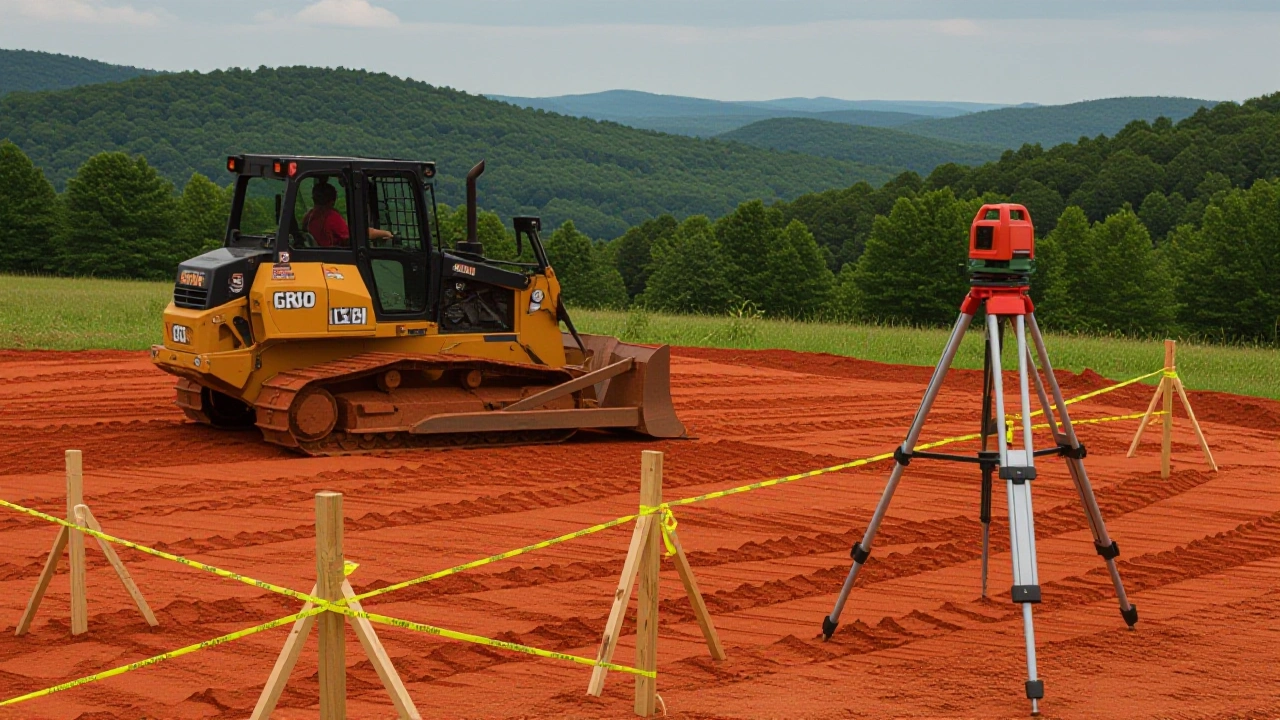
Rough grade first, finish grade last
Rough grading moves the bulk of the dirt. High spots are cut, low spots are filled, and the ground is brought to within a few inches of the elevations on the plan: the house pad, the driveway, the yard. This is where most of the machine hours go.
Finish grading comes after the foundation, the utilities and the backfill are in. It’s the careful pass: smoothing the surface, setting the final fall away from the walls, and leaving the ground ready for topsoil and seed or sod.
A pad, a driveway and a yard want different slopes
A house pad is built close to level so the foundation sits square. A driveway can climb, but only so steeply before cars scrape and winter makes it a sled run. A yard wants a gentle, even fall that a mower can handle and rain can follow off the property. Each of those gets staked with its own cut or fill marked, and the grade is checked against the stakes as the work goes rather than judged by eye.
Fill has to be packed, not just placed
Dirt pushed into a low spot and left loose will settle, sometimes for years. Fill that carries a slab, a driveway or a footing goes down in layers, each one compacted before the next goes on. Topsoil is never used as structural fill. It’s full of roots and organic matter that break down, so it gets stripped first and spread back on top at the end.
Why the ground has to fall away from the house
The ground next to a foundation should drop away from it on every side. Water that runs toward a house soaks the backfill, which is the loosest soil on the lot, and ends up in the crawlspace or against the basement wall. A yard that tips the wrong way is a common reason a crawlspace stays damp, and regrading that strip is often cheaper than any drain.
When Metro wants a grading permit
In Davidson County, Metro Water Services issues grading permits. Its exemption page says a job needs no permit only if the disturbed area stays at 10,000 square feet or less and no more than 100 cubic yards of soil is moved. None of the exemptions apply in a designated floodplain.
A backyard regrade usually stays under both numbers. A new house lot, a long driveway or a pad for a barn can pass one of them sooner than people expect, so we measure the disturbance against those lines at the estimate.