
Call (615) 209-7643 Get my free estimate
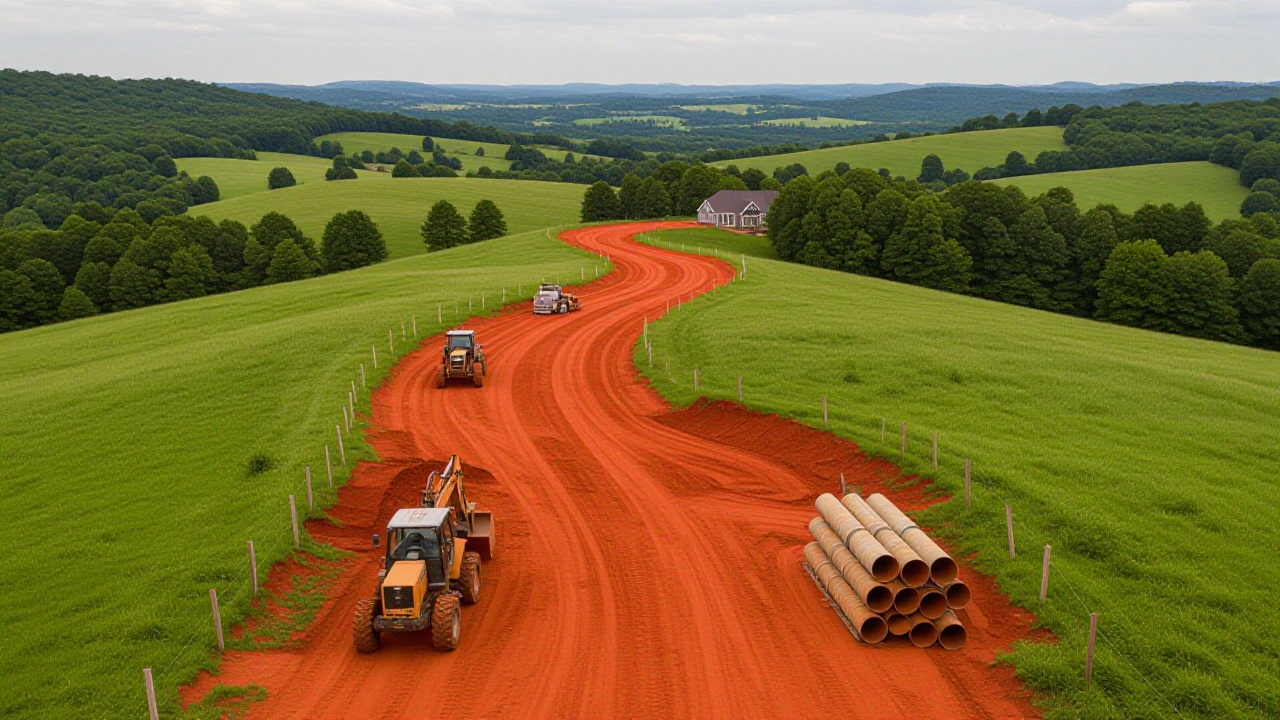
New subdivision road cut through rolling farmland with lots staked out on either side

12 · Land Development

Land development in Nashville: the dirt work planned as one job

Land development pulls the clearing, grading, drainage and utility work into one plan, whether the ground is a single residential lot or a larger commercial site. The point is the order: each step leaves the ground ready for the next.

Call (615) 209-7643 or send the estimate form

Why the site work belongs on one schedule

When four crews each handle a piece, the pieces fight. Clearing done months early leaves bare ground washing away. A drain installed before the grade is set ends up at the wrong depth. A water line trenched across a finished pad means compacting it all over again. Planned as one job, the clearing runs just ahead of the grading, storm pipe goes in at the elevations the grading creates, and utility trenches are dug before the final pass.

The finished grade decides a lot underground. Sewer depth, storm pipe inverts and where water lines cross all depend on the final elevations, so those get settled on paper before anyone digs.

Small lots inside a bigger plan

Tennessee’s construction stormwater permit starts at one acre of disturbance, but acreage alone doesn’t settle it. TDEC’s permit also covers a site under an acre when it’s part of a larger common plan of development or sale that totals an acre or more. Lots in a subdivision being built out one at a time can fall inside that common plan even though each lot is small.

Phasing a large tract

The same permit recommends phasing on every project regardless of size, and keeping the total disturbed area under 50 acres at any one time. In practice that means clearing and grading in sections, getting each one stabilized, and moving on, instead of opening the whole property at once. It costs some efficiency in moving machines around and leaves far less bare ground for a storm to work on.

Tennessee’s $25,000 license line

Tennessee’s Board for Licensing Contractors requires a contractor’s license before a prime contractor bids on a project of $25,000 or more, materials and labor included. Development budgets pass that figure quickly, which is worth keeping in mind when you set up who holds the contract for the site work.

What it takes to plan the job

The survey and the civil plans, if they exist. If they don’t yet, the boundary, what you mean to build and roughly where. From those, the clearing limits, the cut and fill, the drainage paths and the utility routes can be laid out in one sequence and priced together.

Where the land sits matters as well. Inside Metro, in a city with its own engineering office, or out in a county, the permit office is different each time, and its review goes on the schedule the same as the machines do.

What this covers

  • One plan for the whole site
  • Residential lots
  • Commercial sites

Talk it through

(615) 209-7643

Free, no-obligation estimates. You get the schedule before the work starts.

Get my free estimate

Answers

Questions about land development

How much does it cost to develop raw land?

Development cost depends on the land and the plan. How many acres are disturbed, how steep and wooded they are, how far utilities have to run, the roads and drainage the plan calls for, rock, and the permits involved all drive the number. The engineering and survey are usually separate costs from the site work itself.

What does land development include?

On the site-work side, land development includes clearing, erosion control, grading, drainage and stormwater structures, and utility trenching for water, sewer and electric, planned and sequenced as one job. On larger projects it also covers roads, building pads and detention ponds. Engineering, surveying and permits come before and around that work.

What is a common plan of development?

It is TDEC’s term for a larger project built in pieces, such as the lots of a subdivision. Under Tennessee’s construction stormwater permit, a site disturbing less than an acre still needs coverage when it is part of a larger common plan of development or sale that totals at least one acre.

What is the difference between land development and construction?

Land development prepares the ground: the clearing, grading, drainage, utilities and roads that turn raw land into buildable lots or sites. Construction puts up the buildings on that prepared ground. On most projects the site work comes first and the structures follow, though finish grading often wraps up after the building is done.

Can a single residential lot be a land development project?

Yes. One wooded lot can need clearing, a driveway cut, grading for the house pad and yard, a drainage plan, and trenches for water, sewer and power. Handled as one plan, those steps follow in the right order instead of being booked separately. It is the same idea as a larger site on a smaller scale.

Why does utility work have to be planned with the grading?

Because the final grade sets how deep utilities sit. Sewer lines need a steady fall from the building to the main, storm pipes have to meet the elevations of the ditches and inlets, and water lines need enough cover. If the grade changes after the trenches are dug, lines end up too shallow or too deep and the work gets redone.

Free estimate

Get an estimate for land development

Where your message goes and what we keep: privacy policy.

Free, no-obligation estimates

Tell us about the land

Where it is, what is on it now and what you want it ready for. We will look at it and give you a written estimate and a schedule before anything starts.

Call (615) 209-7643 Free estimate