
Find the source before picking the fix
Wet yards have a handful of causes. Roof water dumped at the foundation by short downspouts. Runoff from the hill or the neighbor’s lot above. Ground that has settled and now tips toward the house. Groundwater or a seep that comes up from below after a long rain. Each one has a different answer, and a drain built for the wrong one just buries money in the yard.
The best time to look is during a rain or right after one. Where the water enters the property, where it stands, and where it would go if it could are what the design is built around. Photos and short videos from your phone during a storm tell us more than anything you can describe on a dry day.
The fixes, and when each one fits
Many yards need two of these working together: a swale for the water coming downhill and a french drain for the low spot that stays wet.
- Regrading, when the ground beside the house slopes the wrong way
- A swale, a shallow grassed channel that carries runoff around a house or across a yard
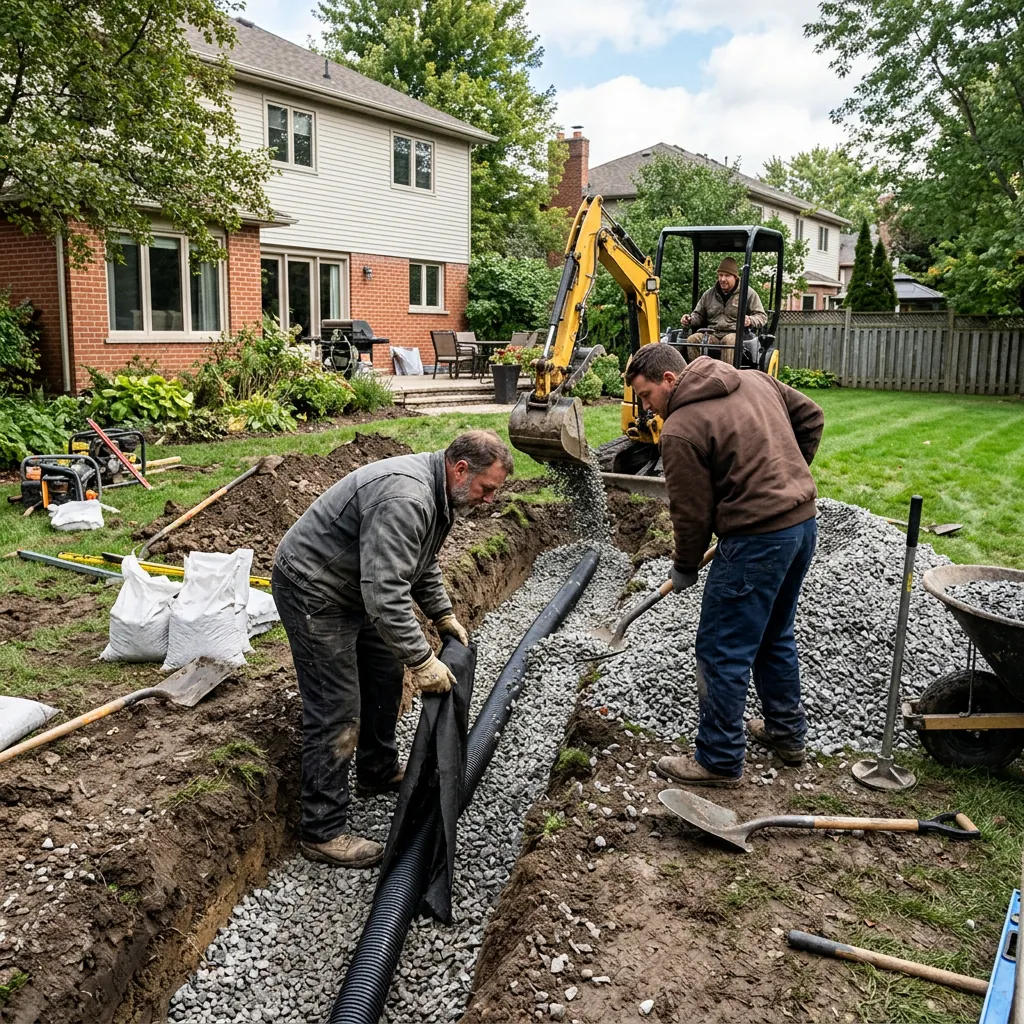
- A french drain, a gravel trench with perforated pipe for ground that stays soggy
- Solid pipe from the downspouts, so roof water leaves underground instead of at the wall
- A culvert, a pipe under a driveway or path that keeps a ditch flowing
How a french drain is built
The trench is dug with a steady fall from the wet area to an outlet, lined with filter fabric and bedded with washed stone. Perforated pipe goes on the stone, more stone covers it, and the fabric wraps over the top so silt can’t clog the gravel. Topsoil and sod or seed go back on top.
The outlet matters as much as the trench. The water has to come out somewhere lower, at a pop-up emitter, a ditch or open ground that can take it, without just landing in the neighbor’s yard.
When drainage work needs Metro’s grading permit
Metro Water Services counts pipes, ditches and changes to drainage channels as land disturbance, along with filling and excavating, and requires a grading permit once the disturbance passes 10,000 square feet. A french drain across one backyard is usually far below that. Re-cutting a ditch along a property line or piping a channel on a larger lot is the kind of job where the permit question comes up.