
Keep it or take it down
A tree is worth a second look when the crown is full of dead wood, mushrooms or shelf fungus grow at the base, the lean has changed since last year, bark is falling away in sheets, or the soil on one side has heaved up. Any one of these can mean rot or root failure. Dead, diseased and risky trees are the ones to deal with before a storm makes the decision for you.
A healthy tree in the way of a driveway, an addition or a sunny garden is a different call. Nothing is wrong with it, so the only question is whether the project needs that spot. Sometimes shifting the driveway a few feet saves an old oak. Sometimes it doesn’t.
Felled whole or taken down in sections
With open ground around it, a tree can be felled in one piece. A notch is cut on the side it should fall toward, a back cut from the other side leaves a strip of wood as a hinge, and the hinge steers the tree down along the line of the notch. Then it’s limbed and cut into lengths on the ground.
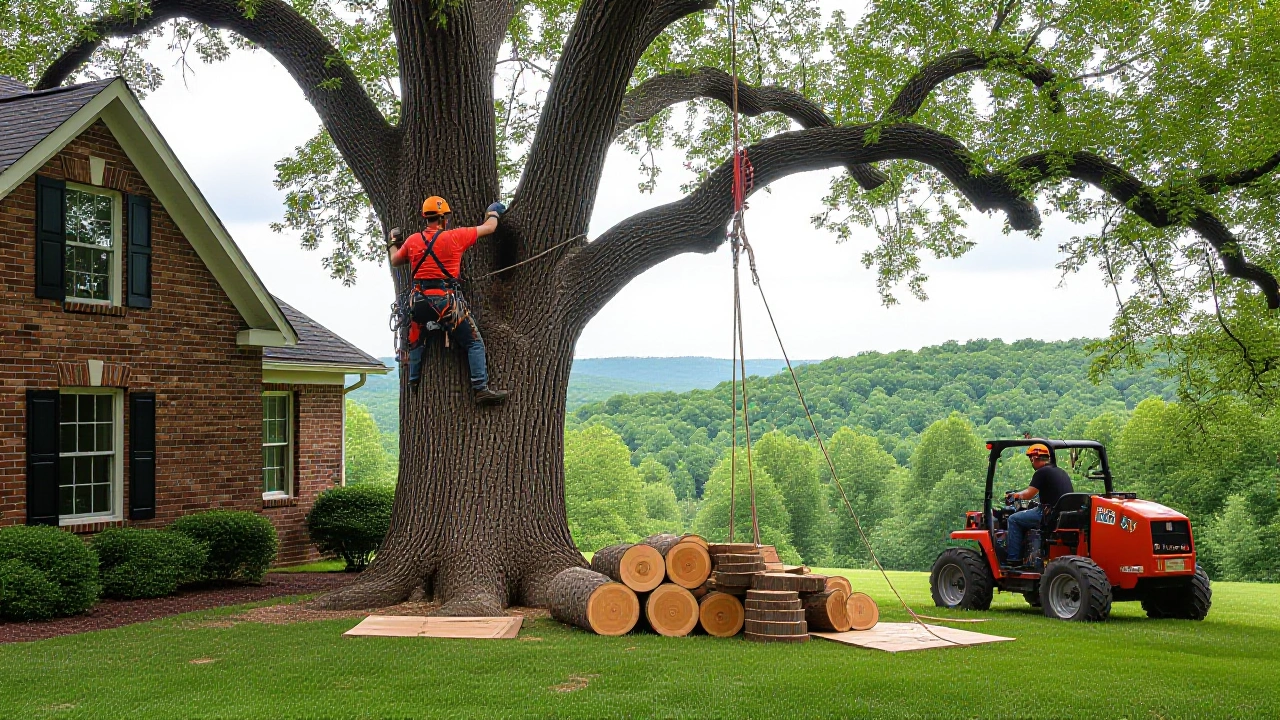
Near a house, a fence, a shed or service lines there’s no room to drop it. The tree comes down from the top in pieces: limbs first, then the trunk in sections, each piece cut and lowered on a rope or swung clear. It takes longer and costs more, and it’s how a big tree beside a house comes out without touching the roof.
The stump: ground down or dug out
Grinding chews the stump down below the surface and leaves the roots to rot in place. It’s quick, and it’s right for a lawn or a bed where you just want the stump gone. Pulling the stump and its root ball leaves a hole to backfill, and it’s the choice when a slab, a driveway or a foundation is going over that spot.
Trees on land headed for development
If the lot is being developed, Metro Nashville’s tree density rules can apply. Under BL2018-1416, in effect since September 2019, the required density stays at 14 trees per acre for one- and two-family residential and rises from 14 to 22 per acre for multifamily and non-residential sites. On those projects, which trees come down is settled with the site plan before anyone cuts.
For one tree in an established yard, what applies depends on the property, and we won’t guess at it here. Ask at the estimate and we’ll talk it through.